Expert knowledge and insights on polyurethane technology,
waterproofing systems, and industrial chemical solutions.
APTECH AF-1000 Spray PIR Foam: Why Korea's Quasi-Noncombustible Insulation System is Gaining Attention
Proposal for Hybrid Insulation System Based on US and European Fire Test Standards
Glass Wool Panel (Fire Resistance/Structure) + AF-1000 Spray (Airtightness/Insulation) Hybrid System

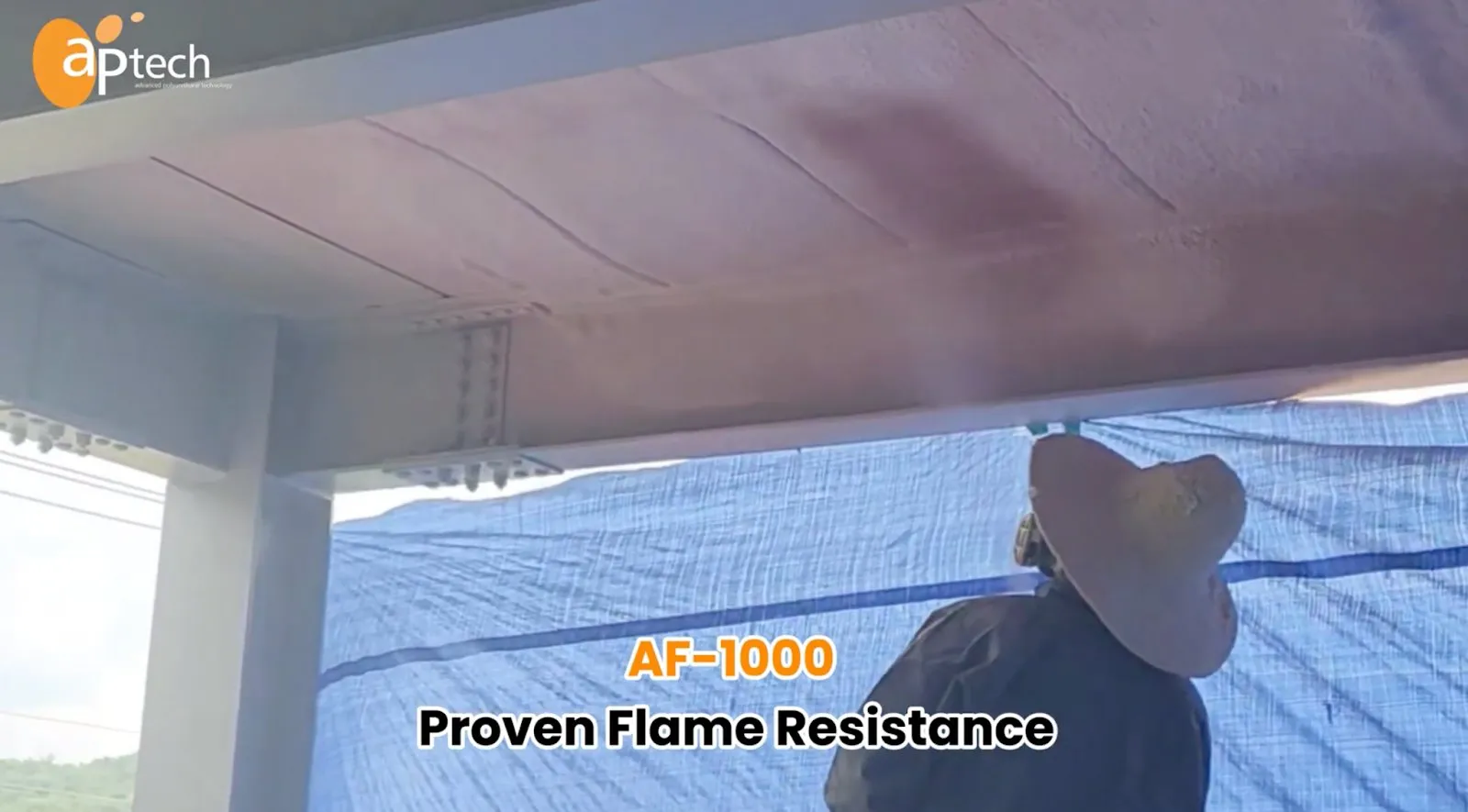
AP Tech. has been supplying Spray PU Foam Systems since 2004, and its AF-1000 PIR Foam, which has passed Korea's quasi-noncombustible standard, has been well received in the market.
Korean Quasi-Noncombustible Test Standards
Korean quasi-noncombustible products must pass both of the following standards simultaneously. These are considered among the most stringent test methods globally for seamless insulation materials.
• KS F ISO 5660-1 (Cone Calorimeter Test): Fire prevention test
• KS F 2271 (Gas Toxicity Test): Life safety test
Description of Korean Quasi-Noncombustible Test Standards
1) KS F ISO 5660-1 (Cone Calorimeter Test)
a. Test Overview
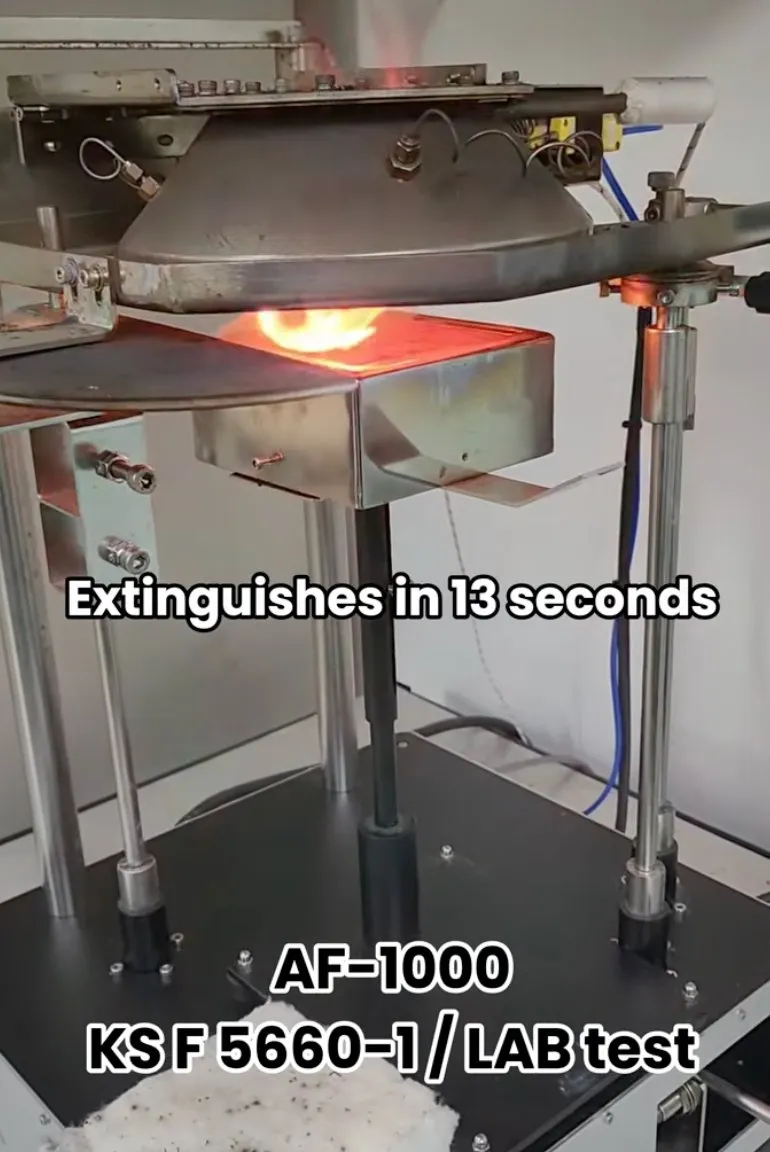
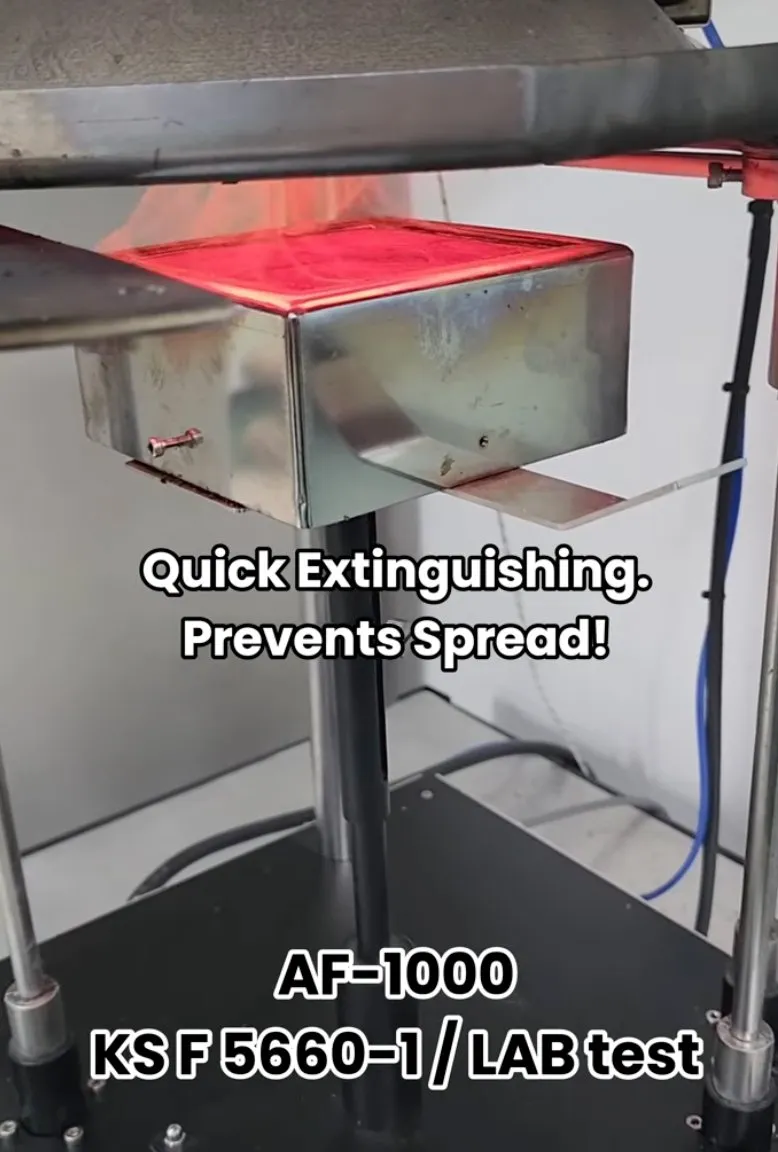
The Cone Calorimeter is a fire performance testing device that measures heat release using the principle of oxygen consumption under radiant heat.
A heater inside a cone-shaped hood generates radiant heat of 50 kW/m² (approx. 730ºC) to heat the specimen, and heat release is calculated by analyzing exhaust gases.
This test is designed to replicate the thermal conditions experienced by walls or ceilings during an actual fire.
The distance between the cone heater and the foam specimen is 2.5 cm, and the specimen size is 10 cm (W) × 10 cm (L) × 5 cm (H).
b. Terminology
• Total Heat Release (THR) ≤ 8 MJ/m²
• Peak Heat Release Rate (PHRR) ≤ 200 kW/m²
• Duration exceeding the PHRR threshold of 200 kW/m² continuously ≤ 10 seconds
2) KS F 2271 (Gas Toxicity Test)
a. Test Overview
The gas toxicity test generates combustion gases using a gas toxicity test apparatus and evaluates the effects of toxic gases based on biological response by measuring the time until loss of movement.
b. Standard
• Mean time to incapacitation of test mice (8 mice average) ≥ 9 minutes
c. Equipment Description
• Combustion Chamber: Generates toxic gases (CO, HCN, etc.)
• Flow System: Transfers generated gas at a constant flow rate
• Exposure Chamber (core): Combustion gases are introduced after placing the test subjects
Example Test Results of AF-1000
| Test Category | Test Item | Unit | Result 1 | Result 2 | Result 3 | Criteria |
|---|---|---|---|---|---|---|
| Heat Release Test | Total Heat Release | MJ/m² | 3.8 | 4.0 | 5.1 | ≤ 8 |
| Duration of continuous heat release exceeding 200 kW/m² | s | 0 | 0 | 0 | ≤ 10 | |
| Presence of harmful fire-related factors | — | None | None | None | None | |
| Gas Toxicity Test | Mean time to incapacitation of test mice | min:sec | 12:52 | 10:18 | — | ≥ 9 min |
Proposal for Review of Panel + Spray AF-1000 (Airtight) Application in US & EU Cold Storage
1) Characteristics of Internal Standards for Cold Storage in the US and Europe
a. Advantage: Fire Safety
The reason Glass Wool Panel systems are the dominant solution is due to fire safety. The key aspects of fire regulations are as follows:
• Europe: Increasing requirements for B-s1,d0 classification
• USA: Strengthening of FM Global insurance standards and preference for FM Approved panels
(* Spray PU is inherently combustible, making approval difficult *)
b. Disadvantage: Airtightness Instability
The key risk lies in significant heat loss at joints. Highly precise mechanical connections are applied for airtightness and moisture control; however, there are weaknesses in terms of durability.
2) Proposal
It is proposed to review the feasibility of introducing a completely sealed, joint-free system by applying AF-1000 as a finishing layer, which has passed one of the most difficult flame-retardant tests to pass globally among seamless organic insulation materials.
3) Specification Example
• Conventional: Glass Wool Panel 250 mm
• Proposed: Glass Wool Panel 200 mm + AF-1000 Spray 50 mm (Hybrid System)
Conclusion — Hybrid Insulation System Proposal
By simultaneously applying:
• Panel systems (flame-retardant / structural performance) selected by regulatory requirements
• Spray systems (airtightness / insulation performance) with superior performance
This Spray Hybrid Insulation System maintains the freshness of agricultural and fishery products in refrigerated and frozen warehouses and is expected to contribute to more economical operation.
FAQ
AF-1000 Key Summary
It meets Korea's quasi-noncombustible standard by passing both KS F ISO 5660-1 (heat release test) and KS F 2271 (gas toxicity test).
Total Heat Release ≤ 8 MJ/m², Peak Heat Release Rate ≤ 200 kW/m², duration exceeding 200 kW/m² ≤ 10 seconds.
It evaluates the effects of toxic gases by generating combustion gases and assessing biological response. The standard requires the mean time to incapacitation of test mice (average of 8 mice) to be ≥ 9 minutes, verifying the impact on life safety in fire situations.
It is applied in a hybrid structure combined with panel systems (Glass Wool Panel + Spray AF-1000) for cold storage and freezer facilities, providing both fire safety and airtight insulation performance.